Health insurance reviews can help you spot recurring problems, but a five-star average or an angry complaint cannot tell you whether a particular plan fits your needs. The review may describe a different network, an older policy or coverage that is not available where you live.
Use reviews to identify questions worth investigating, not as a substitute for checking plan documents. These five red flags will help you separate useful experiences from misleading conclusions before you enroll.
1. The review never identifies the actual plan
A review that says only “this insurer is terrible” leaves out information you need. A single insurance brand can offer employer coverage, individual Marketplace plans, Medicare Advantage plans and other products with different benefits and networks.
Even two plans from the same company in the same state may have different participating doctors. An experience with an employer PPO does not establish how an individual-market HMO will work.
When reading health insurance reviews, look for enough context to connect the experience to the coverage you are considering: the plan name, coverage type, location and year. Reviewers do not need to disclose private medical details to make their feedback useful.
The warning sign is a sweeping conclusion without a traceable plan. For example, “They have no specialists” is less informative than “I could not find an in-network dermatologist accepting new patients in my county.” The second statement gives you something specific to verify.
Older reviews can still reveal recurring service issues, but do not assume that a past network or benefit design remains unchanged. Give more weight to current, relevant experiences than to a large collection of unrelated complaints.
2. The praise or criticism is generic, repetitive or commercially motivated
Repeated phrases, sudden bursts of ratings and absolute claims such as “covers everything” deserve scrutiny. These patterns do not prove manipulation, but they provide little evidence about how coverage works.
Useful health insurance reviews explain an interaction or outcome. A reviewer might describe receiving conflicting answers about a referral or resolving a billing problem after submitting additional paperwork. Specific details make the experience easier to evaluate, even when you cannot independently confirm every part of it.
Also check who benefits from your next step. A comparison page may earn compensation when someone requests a quote or enrolls. That relationship does not automatically invalidate its content, but a clear disclosure helps you judge its recommendations.
Be especially cautious when a page calls one insurer “best for everyone” and immediately sends you to a lead form without explaining its criteria. Provider access, prescription needs and financial circumstances make universal recommendations unreliable.
Before sharing personal information, check the business identity, privacy terms and contact permissions. Insurance2All’s guide to assessing whether health insurance comparison sites are safe explains checks that are separate from judging a plan’s quality.
Look for independent corroboration rather than perfect wording. A short or emotional review can be genuine, while a polished review can still omit important limitations.
3. Health insurance reviews treat unlike ratings as interchangeable
A customer-review score, a Marketplace quality rating and a Medicare star rating answer different questions. They should not be combined into an informal league table just because each uses stars or a numerical score.
Before comparing ratings, check the population covered, the measurement period and the level being rated. A score might describe a particular product, an insurance contract or a broader collection of customer experiences.
| Rating source | What it helps you assess | Important limitation |
|---|---|---|
| Consumer review platforms | Reported service, billing and claims experiences | Reviewers are self-selected and may discuss different products |
| HealthCare.gov quality ratings | Quality measures for eligible Marketplace plans | Ratings may be unavailable for some plans and reflect an earlier measurement period |
| Medicare star ratings | Quality and performance of Medicare Advantage and Part D contracts | Contract-level ratings do not verify every local plan’s benefits or network |
| NCQA Health Plan Ratings | Performance using clinical quality and patient-experience measures | Compare the relevant coverage category and rating year |
The official explanations of HealthCare.gov quality ratings and NCQA Health Plan Ratings can help you understand what each system measures.
A missing rating is not automatically a failing grade. New plans or plans without enough reportable data may lack a score.
When comparing health insurance reviews with formal ratings, keep both in context: personal experiences can flag practical problems, while standardized measures provide a broader assessment. Neither confirms that your doctor participates or your medication is covered.
4. Claims about denials or complaints lack context
Statements such as “this company denies the most claims” sound decisive. Without a source and a clear definition, they may be misleading.
A rejected claim, a denied prior authorization and a final denial after appeal are different events. A claim may initially fail because of missing information or a coding issue, then be corrected and paid. Other denials involve coverage exclusions, network restrictions or medical-necessity decisions.
When health insurance reviews cite denial statistics, check what was counted, which plans were included and whether the figures describe initial decisions or final outcomes. A percentage from one market or reporting period should not be presented as a prediction for every customer.
Complaint totals also need context. A large insurer may receive more complaints simply because it covers more people. A useful comparison considers enrollment or another stated denominator, the insurance category, the time period and whether complaints were confirmed or merely submitted.
The National Association of Insurance Commissioners provides consumer resources for researching insurers and complaints. State insurance departments can also help you understand which information applies to a particular insurer or coverage arrangement.
Treat repeated, specific complaints as leads to investigate, not proof of your future experience. Reports about delayed specialty-drug approvals, for example, should prompt questions about authorization requirements and appeal procedures for your medication.
5. The review recommends a plan without checking your care and costs
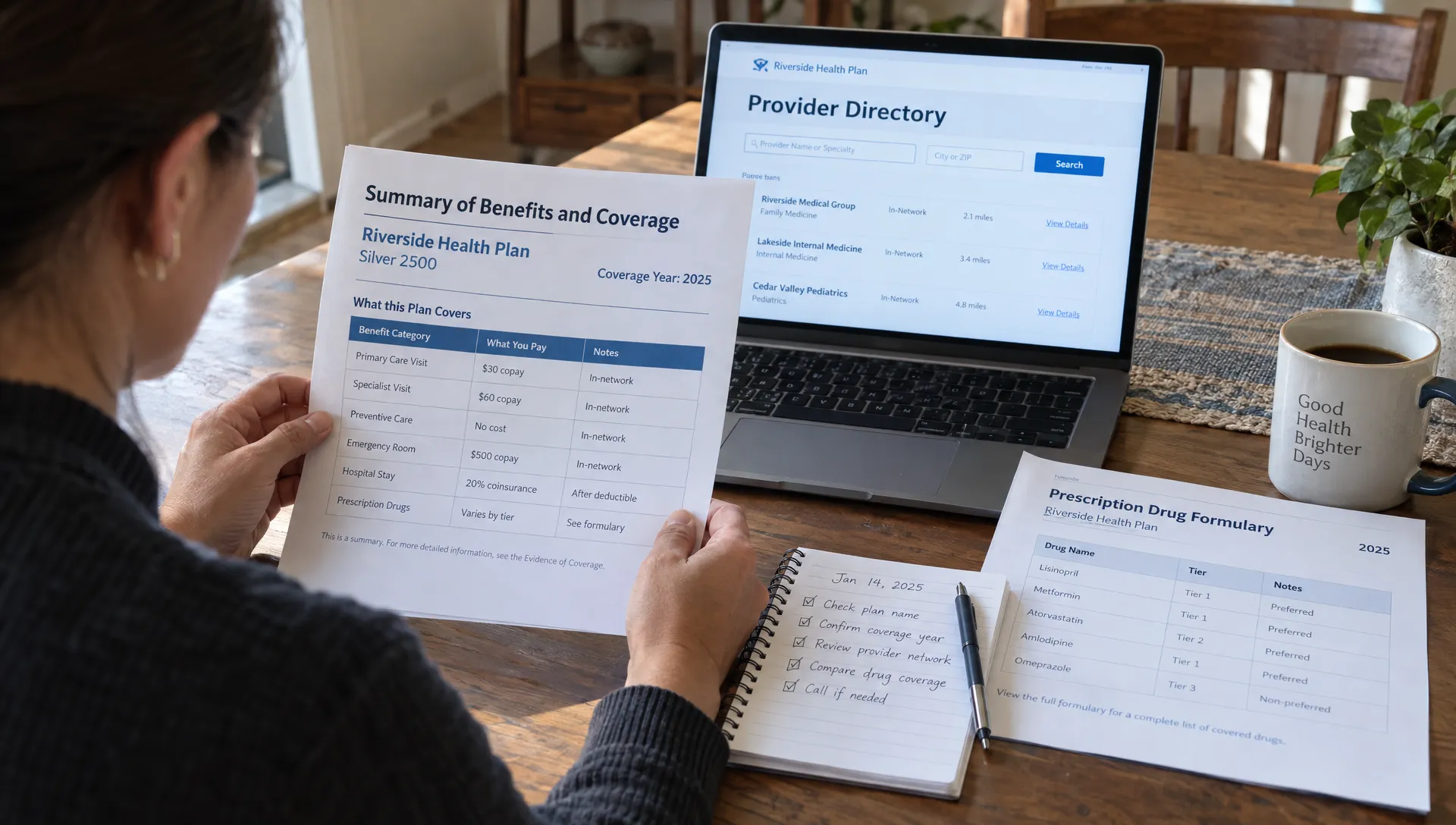
A recommendation is incomplete if it focuses on reputation or a low premium while ignoring how you use healthcare. Even excellent customer service cannot make an out-of-network specialist affordable or add an excluded benefit.
The most useful health insurance reviews give you questions to ask. Before enrolling, resolve those questions using current documents for the exact plan and coverage year, not a general description of the insurance company.
Verify providers and prescriptions separately
Search the insurer’s directory for the exact network, then confirm participation with both the insurer and the provider’s office. Ask about the specific plan and practice location rather than whether the office simply “takes” the insurance brand. Also check whether the provider is accepting new patients.
For prescriptions, review the current formulary and search for the exact drug, strength and formulation. Confirm its tier, any deductible that applies, prior authorization, step therapy and quantity limits. Check pharmacy participation and specialty-pharmacy requirements when relevant.
Save dated confirmations or reference numbers. These records can help if you later receive conflicting information, although they do not replace the policy’s coverage terms.
Check the financial limits behind the recommendation
Review the Summary of Benefits and Coverage for applicable individual or employer plans. For Medicare coverage, use the relevant Summary of Benefits and Evidence of Coverage, and compare options through Medicare’s official plan finder.
Compare premiums, deductibles, copayments, coinsurance and the applicable out-of-pocket limit. Do not assume that every expense counts toward that limit: premiums, noncovered services and many out-of-network expenses generally do not.
A positive verdict in health insurance reviews should never override an exclusion or cost-sharing rule in the actual plan documents. Ask for clarification before enrolling if the documents and a representative’s explanation disagree.
If you are considering keeping existing coverage, these checks before renewing health insurance can help you turn review concerns into a practical comparison.
Frequently asked questions
Which health insurance company is best according to reviews? There is no single review-based winner for everyone. Narrow your options by location, coverage type, providers and prescriptions first. Then compare relevant quality ratings and recurring service concerns among the plans that meet those needs.
Can health insurance reviews tell me which company denies the most claims? Not reliably on their own. Reviews are not a representative claims dataset. Even published denial rates require matching definitions, reporting periods and coverage categories before they support a meaningful comparison.
Should I avoid a plan because of one serious complaint? Investigate the issue, especially if it concerns care you need. One complaint does not establish a pattern, but it can identify an important question about authorization, network access or appeals that deserves a specific answer.
Are official star ratings enough to choose a plan? No. They provide useful quality information, but they do not establish whether your physicians participate, your medications are covered or your expected costs fit your budget. Those checks remain necessary.
Compare the plan behind the rating
Bring your shortlist, provider names, medications and unresolved questions to a licensed advisor. Insurance2All offers free, no-commitment quotes and comparisons from 50+ carriers, with bilingual guidance and enrollment application support.
Use that help to compare available coverage, then verify the details that matter to your care before submitting an application.