Using health insurance comparison sites can be safe, but a professional-looking page is not proof that a business will protect your information or recommend suitable coverage. Some sites help you compare actual policies. Others mainly collect contact details and pass them to insurance marketers.
The safest approach is to verify the business, understand its data-sharing practices and confirm the policy before you enroll. A legitimate quote is not the same as approved coverage, and a low advertised premium does not tell you what a plan excludes.
You do not need to avoid online comparisons altogether. You need to recognize what kind of website you are using, which information belongs at each stage and which warning signs should stop the process.
When are health insurance comparison sites safe?
A comparison service is a reasonable starting point when it clearly identifies its operator, explains how your information will be used and lets you review identifiable insurance products without pressure.
Different websites play different roles:
| Website type | What it generally does | What to verify |
|---|---|---|
| Government Marketplace | Shows Marketplace coverage and determines eligibility for financial assistance | Start through HealthCare.gov or your official state Marketplace |
| Licensed agency or broker | Helps consumers compare and enroll in plans from participating insurers | Agency identity, applicable licenses and which insurers it represents |
| Lead-generation website | Collects information for referral to agents or marketing partners | Who receives your information and what contact you authorize |
| Insurer website | Presents that insurer’s products | Whether you are on the insurer’s genuine domain and which products are available |
A lead-generation site is not automatically fraudulent. The concern is whether its purpose and consent language are clear before you submit your details.
For ACA coverage, HealthCare.gov provides an official starting point and directs residents to state-run Marketplaces where applicable. Private websites are not government agencies, even when they offer legitimate Marketplace enrollment assistance.
Verify the business behind the website
Before entering personal details into health insurance comparison sites, look for a legal business name, working contact information and a clear explanation of the company’s role. A brand name alone may not be enough to identify the entity handling your application.
If an agent or agency will sell you insurance, verify the relevant license with your state insurance department. The National Association of Insurance Commissioners’ state department directory can help you locate the appropriate regulator. Check that the identity and contact details match, rather than accepting a license number copied onto a webpage.
Look closely at the address bar, too. Misspelled domains and look-alike government branding deserve scrutiny. HTTPS encrypts information traveling between your browser and a website, but a padlock does not prove that the business is legitimate.
Reviews can reveal patterns such as unexpected calls or difficulty reaching support. They are supporting evidence, not a substitute for checking identity and licensing. Likewise, appearing in a sponsored search result does not establish government approval or professional credentials.
Share information in stages, not all at once
The information needed for a rough estimate differs from what an insurer or Marketplace may need to process an application.
For an initial comparison, health insurance comparison sites may ask for your ZIP code, age, household size and estimated household income. Contact information may be requested so an advisor can follow up, but review that requirement before proceeding.
Use this distinction to judge requests:
- Early estimates: Location, ages of applicants and basic coverage needs can help identify available options. Income and household information help estimate potential Marketplace assistance.
- Formal applications: Eligibility verification may require additional identity, income or immigration information through a verified enrollment process.
- Payment: Confirm the insurer, policy and payment instructions before providing financial details. Do not send payment through gift cards, cryptocurrency or an unverified payment link.
A Social Security number is generally not necessary merely to browse plans or obtain a preliminary estimate. A legitimate application may request it later where applicable, so the timing and verified destination matter.
Do not email identity documents or bank details to an unfamiliar sender simply because the message references a quote you recently requested. Contact the organization using independently verified details first.
Read the contact-consent and privacy language
The text beside a “Get quotes” button can matter as much as the button itself. Read whether submitting the form authorizes calls, texts, automated communications or contact from other businesses.
Before using health insurance comparison sites, check whether the privacy notice explains what information is collected, why it is collected and which categories of third parties receive it. Look for a practical way to ask privacy questions or exercise any applicable privacy rights.
A long partner list does not necessarily indicate a scam, but it may mean your request reaches more businesses than you expected. If you only want an on-screen estimate, a form requiring broad marketing consent may not suit your needs.
Do not assume every comparison website is covered by HIPAA. HIPAA applies to certain regulated entities and their business associates, not automatically to every website collecting health-related information. A statement that a site takes privacy seriously is not the same as a legal guarantee about every use of your data.
Save a copy or screenshot of the consent language and quote details. That record can help if the follow-up differs from what you understood.
Confirm that the quote describes actual insurance
Privacy is only half the safety question. A website can handle your details appropriately yet present a product that does not meet your medical or financial needs.
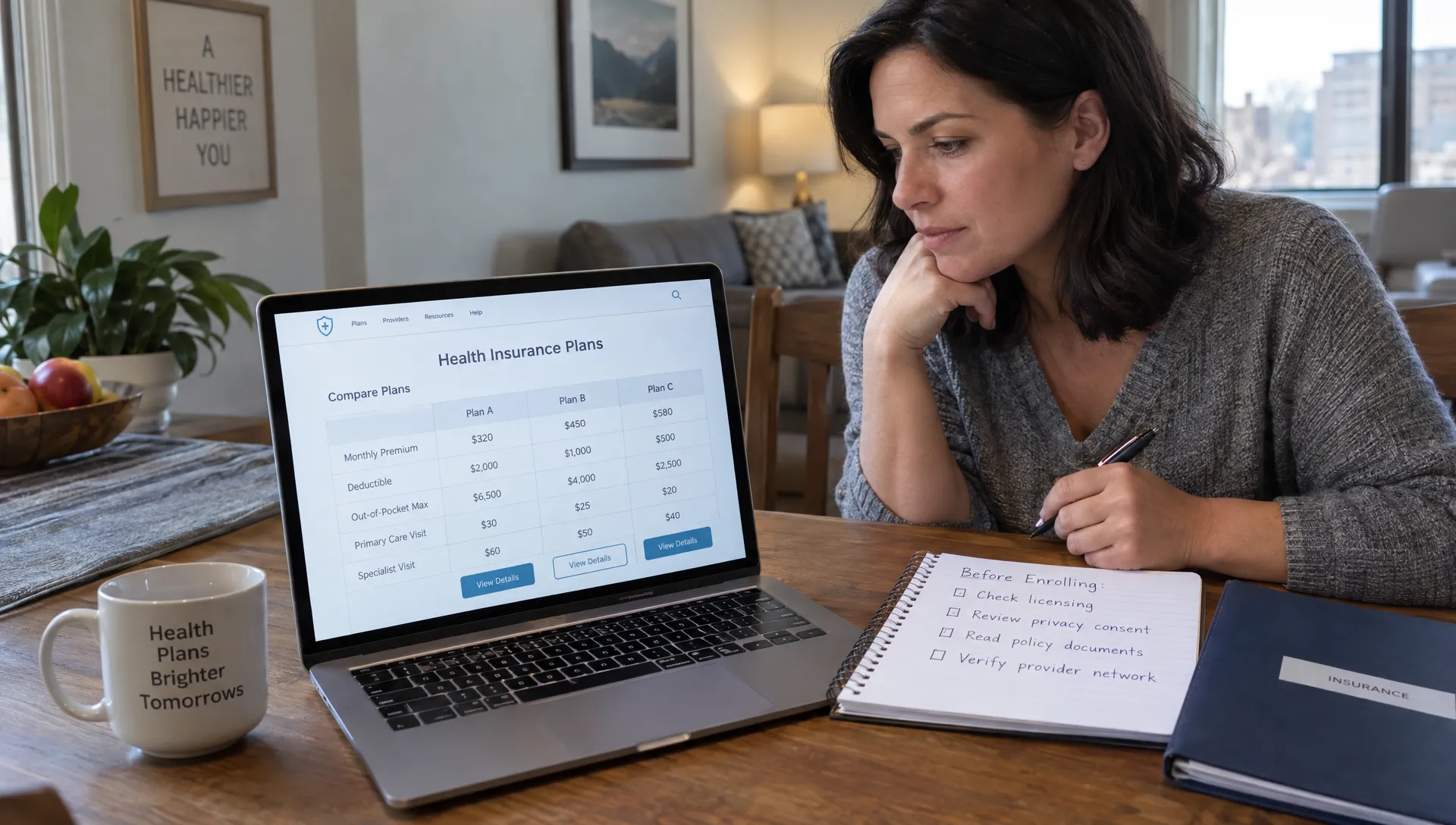
When reviewing offers from health insurance comparison sites, identify the insurer, exact plan name, coverage type and proposed effective date. Ask whether the product is ACA-compliant major medical coverage, a short-term policy, fixed-indemnity insurance or a discount arrangement. These products do not provide interchangeable protection.
Use the policy documents to check the claims made on the results page:
| Item to check | Why it matters |
|---|---|
| Premium and financial assistance | An estimated subsidy may change when eligibility information is verified |
| Deductible and out-of-pocket limit | A low monthly price can accompany substantial costs when you need care |
| Benefits and exclusions | Some products limit benefits or exclude conditions and services |
| Provider network and prescriptions | Your preferred doctors, hospitals or medications may not be covered as expected |
| Effective date and initial payment | Submitting an application does not necessarily activate coverage |
For applicable plans, request the Summary of Benefits and Coverage as well as relevant policy documents. Our guide to finding comprehensive health coverage explains the coverage features worth checking beyond the premium.
Verify provider access separately
An insurer’s name or familiar hospital logo on a comparison page does not establish that a particular doctor accepts the exact plan you are considering. Networks can differ between products from the same carrier.
Treat provider information on health insurance comparison sites as a starting point. Check the insurer’s current directory, then ask the provider’s billing office about the exact plan and network. Confirm the relevant location and treating professional, not just the practice name.
Dental benefits deserve a separate check because routine adult dental care is generally not included in medical coverage. A clinic’s service list also does not establish insurance eligibility. For example, CP Dental’s Brisbane dental services describe care available in Queensland, Australia, not whether a U.S. policy will pay for it. Anyone considering treatment abroad should ask their insurer about overseas exclusions and reimbursement before booking.
For planned treatment, ask whether prior authorization is required. Even an in-network appointment does not mean every associated service will be covered without additional cost.
What to do if you already submitted information
Unexpected calls after a quote request do not, by themselves, prove identity theft. Your submission may have authorized marketing contact. Still, you can take steps to limit further exposure.
If health insurance comparison sites trigger unwanted calls, ask the contacting business to stop and use any available consent-withdrawal or privacy-request process. Keep a record of your requests. Avoid giving additional information to callers whose identity you cannot verify, even if caller ID looks familiar.
If you entered a password that you also use elsewhere, change it on the affected accounts. If you shared payment details with a suspected scammer, contact your bank or card issuer promptly using the number on your statement or card.
For suspected Social Security number misuse, IdentityTheft.gov provides a federal recovery resource. You can also report suspected insurance misconduct to your state insurance department.
If someone claims you enrolled in coverage, verify the policy directly with the named insurer. Do not cancel existing insurance until you have confirmed that replacement coverage is active and understand its effective date.
Frequently asked questions
Are health insurance comparison sites free? Many offer free quotes, including Insurance 2ALL. Official Marketplace enrollment assistance is also free. Review any fee disclosure before proceeding and distinguish a quote or assistance fee from the premium paid for insurance coverage.
Will requesting a quote affect my credit score? A basic health insurance quote request is not a credit application and should not create a hard credit inquiry. Identity verification is a separate process. Ask for an explanation if a site requests authorization for a credit check.
Do comparison websites show every available plan? Not necessarily. Results can depend on your location, the website’s insurer relationships and the products it supports. Comparing many carriers across a business does not mean every carrier or policy is available to every applicant.
Can I trust a caller who knows the information I entered? Not solely on that basis. Shared lead information can include details from your form. Independently verify the caller’s business, licensing where applicable and relationship to your request before discussing sensitive information.
Is a quote confirmation proof that I have coverage? No. Confirm application approval, the effective date and any required initial premium payment with the insurer or Marketplace. Keep the enrollment confirmation and policy documents.
Compare coverage with clear expectations
The value of health insurance comparison sites depends on both the quality of the options and how clearly the service explains its role. Verify first, share only what the current step requires and make the final decision from policy documents rather than advertising claims.
Insurance 2ALL offers free, no-commitment quotes, licensed advisor guidance, bilingual support and enrollment application assistance. You can compare individual and family health plans and ask which insurers and options are available for your situation before deciding whether to apply.